
Each year, we dig through tens of thousands of water news articles to understand how the media covers our issues. And each year a similar pattern holds: when disaster strikes, water is on the front page. We used a keyword analysis in Meltwater software to scan media coverage across three categories: water supply, water safety, and water access and affordability. Last year’s scan covered more than 137,000 articles published in 2025, a modest decline across the three categories we track.
Read on for the highlights.
What we learned
2025 held no shortage of disasters, from the Los Angeles wildfires exposing the limits of municipal water systems to how a large-scale plant failure in a major city can shut down a state capitol, to deadly flooding in the Texas Hill Country, the impacts of frozen federal water infrastructure funding, and the rollback of clean water protections. Chronic stories about water access, environmental justice, and climate preparedness tended to get more traction when they were tied to a crisis or covered in depth by specialized outlets like Inside Climate News, Grist, The Margin, Capital B News, and independent newsletters.
The slight decline in water news coverage we observed last year also fits into a larger pattern in environmental and climate journalism. Nieman Reports recently tracked this trend in climate journalism: a University of Colorado Boulder report found media coverage of climate change decreased 14% in 2025 compared to the prior year, and Media Matters found a 35% decline in broadcast news climate coverage in 2025. High-profile layoffs at CBS and the Washington Post gutted their climate desks. It’s only fair to assume declining reporter capacity, environmental journalists stretched too thin across too many crises, and a lack of investment from major news organizations contribute to this trend.
In response to these shifts, the Water Hub is pairing traditional press outreach with a growing investment in digital content and creator engagement. As people get informed through a more fragmented and complex media landscape, our goal is to help our partners meet audiences where they are through a multi-channel ecosystem — local news, in-depth reporting, specialized outlets, and independent creators — that complement one another.
Water supply
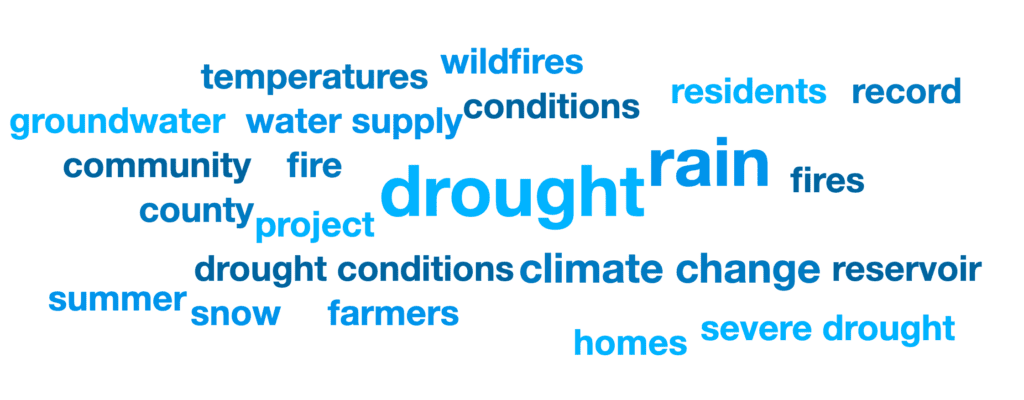
As in previous years, water supply coverage accounted for the largest share of water media coverage in the U.S. in 2025 (50%). The major news drivers:
- Drought dominated headlines, appearing in nearly 3 out of 4 water supply stories (50.4k mentions). Agricultural coverage was the second-most prominent theme (24.5k mentions), with stories tracking everything from Yakima Valley orchards to Texas producers navigating water shortages along the Rio Grande.
- The Colorado River remained in crisis mode (8.2k mentions). The big news: the approaching expiration of the 2026 interim guidelines, which was referred to as a “political nightmare” in Politico, by year’s end.
- Climate change was still a major keyword (15.1k mentions), but climate mentions in water supply stories had dropped 25% from the prior year — consistent with the broader trend in environmental journalism described above.
- Data centers emerged as a new water demand story with 1.5k mentions, a 234% increase from 2024.
- Weather whiplash — the swings between drought and deluge — framed coverage from California to Texas. ABC News explained how “climate whiplash” fueled the LA fires, and CNN explored how drought-hardened soils contributed to the “perfect storm” that flooded Texas Hill Country.
- River restoration was a bright spot in the Northwest as dam removal gave way to Indigenous youth celebrations and historic salmon runs.
Water safety
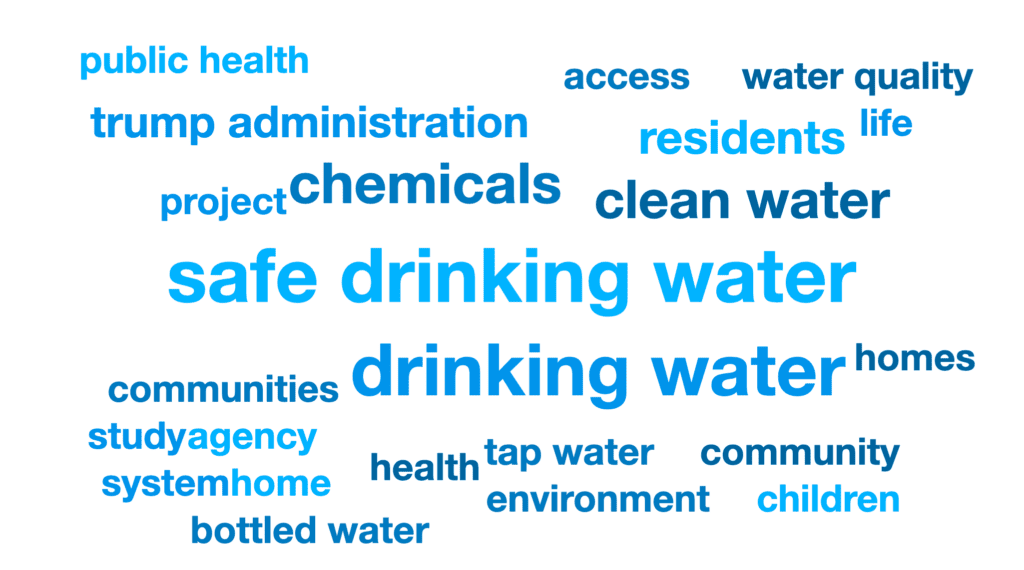
About 25% of water stories focused on water safety, from drinking water quality to ecological restoration. Drinking water was the dominant keyword, appearing in more than 3 out of 4 water safety stories (26k mentions). Coverage focused on:
- Trump administration rollbacks of federal water protections. In May, the EPA partially rolled back Biden-era PFAS drinking water limits. Following the Supreme Court’s Sackett v. EPA ruling, the Trump administration also proposed ending Clean Water Act protections for 80% of U.S. wetlands.
- Infrastructure cuts became visible in state budgets. Missouri ended a 50-year-old lake-water testing program after losing federal funding. Wisconsin’s environmental funding cuts were among the highest in the nation. Alabama has slashed its environmental department budget by half over 15 years. More than a dozen federal public health tracking programs were eliminated, including work tied to lead exposure monitoring.
Water access and affordability
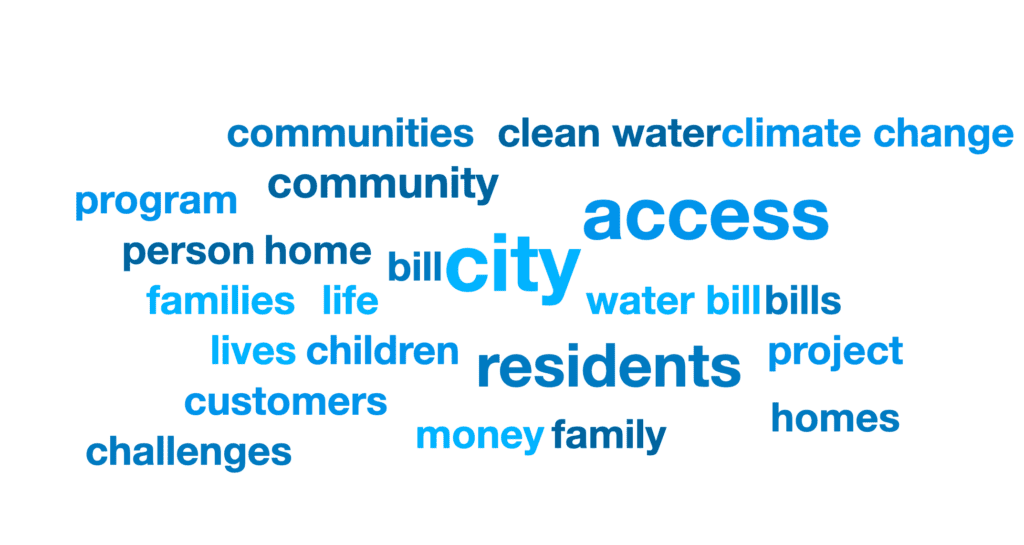
Access was the top keyword in the category (15.3k mentions), followed by infrastructure (6.4k), drinking water (5k), and affordability (1.6k). Stories around failing drinking water systems and who pays to maintain infrastructure drove coverage:
- Mobile home communities bore a disproportionate share of water shutoffs and service failures. The Associated Press reported nationwide that clean, safe tap water isn’t a given for millions of mobile home residents. Residents in a South Carolina mobile home park and an Almont, Michigan, community went without water when landlords fell behind on payments.
- Environmental justice gaps stayed in the news. Inside Climate News published a powerful piece on Chestnut, Alabama, where Black residents have lived for years without access to public water at all. In April, the Trump administration’s DOJ terminated a high-profile civil rights settlement addressing sewage conditions in nearby Lowndes County. Native News Online reported that half of the households on Native American reservations lack reliable access to clean water.
- Rate hikes and billing disputes showed up everywhere this year, often resolved one household at a time by local TV investigative teams. Philadelphians saw a 9.4% rate hike. San Diego County officials warned that costs could more than double over the next decade.
- Affordability became a campaign issue. In New York City, mayoral candidate Zohran Mamdani folded water and utility costs into his affordability platform. Detroit’s city council race saw candidates raise water debt as a campaign issue. Michigan lawmakers and advocates continue to push for income-based water billing.
What's next?
Read the full report to go deeper, and sign up for the Water Hub’s newsletter to get the latest updates on our research, invitations to training sessions, and additional resources.
Featured image © Luke Runyon/The Water Desk
